


We all know the unmistakable sound of a sudden San Isidro downpour hammering against a tin roof. During these heavy aguaceros, that beautiful mango or Roble Sabana tree overhanging your kitchen suddenly looks less like welcoming shade and more like a looming hazard. In the lush valley of Pérez Zeledón, the same tropical climate that gives us breathtaking greenery also forces us to rethink how we manage our properties. Your favorite shade trees can grow at an astonishing rate, requiring proactive care to ensure they survive the wet season without damaging your home. Best way to find the tree trimming service in San Jose.
According to local arborists, the unique microclimate of the Southern Zone accelerates canopy expansion far beyond what many homeowners expect. A young Guanacaste that looks perfectly balanced in January can easily become dangerously top-heavy by July. This high-velocity growth forces a critical shift in how we view our outdoor spaces. What starts as a simple aesthetic plant eventually transforms into a massive structural hazard if left unmanaged.
Many property owners make the mistake of assuming their regular gardener can handle this explosive growth with a trusty machete. However, hacking away at thick branches is a recipe for disaster that often leaves the tree unbalanced and vulnerable to rot. There is a massive difference between basic garden maintenance and technical tree safety. Choosing the right professional tree trimming service in San Isidro de El General means moving past amateur yard work and investing in professional expertise.
To protect your home, you must understand the vital difference between structural pruning and aesthetic trimming. Think of aesthetic trimming as a light haircut that shapes the outer leaves for curb appeal, while structural pruning focuses on the hidden skeleton of the plant. Proper pruning builds storm resistance by removing deadwood and directing energy away from weak, heavy joints. Conversely, randomly chopping off the top of a tree—often called “topping”—causes severe shock and guarantees that the new regrowth will be fragile and dangerous.
In practice, most San Isidro residents ultimately seek professional help for three highly specific reasons as the rainy season approaches. First, they need to prevent heavy limbs from crashing through roofs or lifting driveways with overgrown roots. Second, they must keep fast-growing palms and cedars safely away from buzzing ICE power lines. Finally, property owners want to preserve their stunning views of the Chirripó mountains without resorting to illegal cutting practices that violate local MINAE regulations.
Protecting your real estate investment requires finding a local partner who balances safety, legal compliance, and long-term plant health. Hiring a crew equipped with proper climbing gear ensures that the job protects both your wallet and the surrounding environment. As you look around your property today, take a moment to evaluate the “V” joints where your largest trunks meet. If those massive branches look ready to snap in the next storm, it is time to learn exactly what to look for in a qualified tree care team.
How the Pérez Zeledón Climate Accelerates Tree Hazards
Living through the rainy season in San Isidro de El General means watching our landscapes explode with fast-paced growth. While this lush environment is beautiful, constant moisture drastically increases the physical stress on your canopy. A single Mango branch can double in weight when soaked by afternoon downpours, turning a seemingly normal limb into a heavy threat suspended over your roof.
Another hidden danger of our tropical weather is the abundance of epiphytes—those beautiful bromeliads, ferns, and mosses growing directly on tree bark. Because these harmless-looking plants act like natural sponges, they trap moisture against the wood for months. This constant dampness creates severe internal rot, secretly compromising tree health while the branch still looks perfectly green and vibrant from the outside.
To prevent storm damage, property owners must prioritize strategic timing rather than waiting for an emergency. The absolute best window to evaluate and prune your shade trees is just before the heaviest continuous downpours arrive in October. Spotting a rotting branch early allows you to safely remove the hazard before relentless winds test its failing strength.
When faced with these towering, water-logged canopies, it often seems logical to just chop the whole crown off to guarantee nothing falls on the house. Unfortunately, reaching for a machete to completely flatten a large tree creates a much worse situation down the road. Topping your trees is a costly mistake that compromises both your safety and your long-term property value.
Why ‘Topping’ Your Trees Is a Costly Mistake for Your Safety
When a massive Guanacaste or Avocado tree casts a shadow over your roof, the quickest fix seems to be hacking off the top branches. However, this severe practice—known as topping—is more like a traumatic injury than a healthy haircut. Stripped of its food-producing leaves, a panicked tree rapidly pushes out emergency shoots called epicormic growth, or “water sprouts.” Because these fast-growing sprouts shoot straight up from the wounded bark rather than a solid wood foundation, they are weakly attached, meaning the tree topping risks you just tried to avoid actually multiply.
Instead of aggressive hacking, a professional approach focuses on structural thinning. Here is the clear difference between destructive topping and a safe crown reduction:
- Topping (The Hazard): Blindly chops branches at random points, starves the roots, and guarantees the rapid return of brittle water sprouts that easily snap in October winds.
- Crown Reduction (The Solution): Carefully shortens specific limbs back to a natural side branch, safely shrinking the canopy’s overall size while preserving its structural strength.
Paying an amateur to blindly chop your shade trees might seem cheap today, but that weak regrowth forces you into an expensive cycle of constant cleanup. Hiring a knowledgeable tree cutting service ensures your canopy is managed correctly the first time. Ultimately, falling water sprouts aren’t the only threat to your property; heavy limbs also pose hidden dangers when overgrown branches near ICE power lines are ignored.
The Hidden Dangers of Overgrown Branches Near ICE Power Lines
Looking up at our lush San Isidro canopy, it is easy to forget that vibrant greenery shares space with a high-voltage grid. The safety risks of overgrown branches near power lines become critical during heavy rains, when waterlogged limbs sway into street cables. These main ICE power lines carry massive voltage that can actually arc—jumping through the air to a nearby branch without physical contact. Because of this arcing risk, you must maintain a strict three-meter (ten-foot) minimum clearance between any foliage and high-tension street lines.
While the utility company manages the main street grid, the cable connecting the pole directly to your house—the service drop—is your legal responsibility to keep clear. If a heavy Mango branch rubs against your service drop, constant friction rapidly strips the protective insulation. This exposed wiring routinely fries expensive home appliances or triggers electrical fires right as an afternoon downpour begins.
Clearing these hazardous gaps yourself is a fatal gamble, as wet tropical wood acts as a powerful electrical conductor. When researching a professional tree service, look for crews equipped with non-conductive fiberglass poles and proper safety rigging. These experts dismantle overhanging hazards piece by piece, dropping the heavy debris harmlessly away from your fragile electrical connections.
Neutralizing these structural grid hazards guarantees peace of mind when the fierce October winds hit Pérez Zeledón. With your property boundaries safely secured, you can redirect your attention to the rewarding side of garden management, focusing on maximizing the yield of your tropical fruit trees.
How to Prune Tropical Fruit Trees for Maximum Yield
Transforming a massive, unruly backyard giant into a heavy producer requires careful timing. The best time to trim fruit trees in Costa Rica is immediately after their harvest window closes. If you cut while the canopy is actively flowering, you are essentially throwing away next season’s crop. Lowering the overall tree height during this post-harvest period keeps your avocados and citrus within easy picking reach, meaning you will not need a dangerously tall ladder to enjoy your garden’s bounty.
Beyond just keeping branches safely low, maximum yield comes down to sunlight penetration. Imagine your tree’s canopy as a thick umbrella; if the middle is completely blocked, sunlight cannot reach the interior branches where the heaviest fruit develops. Arborists solve this using the “Open Center” method, shaped through a simple structural checklist:
- Remove dead, diseased, or rubbing branches first.
- Clear the vertical middle branches to create a central light shaft.
- Trim the outer canopy tips to encourage wide, horizontal growth.
Proper Mango pruning perfectly illustrates this structural benefit, as the newly created internal airflow dries out heavy morning dew quickly, preventing the fungal black spots that often ruin local harvests. While managing these directional growth patterns helps your property thrive, executing these precise, angled cuts requires proper gear and specialized knowledge, highlighting a massive quality gap between professional pruning and basic machete work.
Professional Pruning vs. Machete Work: The Quality Gap
Walking through Pérez Zeledón, you frequently hear a machete chopping a heavy Guanacaste branch. While perfect for clearing brush, using improper cutting tools for large limbs severely damages your valuable canopy. Professional pruning relies on sharp chainsaws and specialized handsaws to create flat, clean cuts. Blunt hacking leaves jagged, torn bark that quickly invites tropical fungi and wood-boring insects directly into the living wood.
Making a smooth cut at the exact right spot separates a quick landscaping job from a smart property investment. Every branch has a swollen base called the branch collar, which acts as the tree’s natural healing mechanism. Leaving this collar perfectly intact triggers the compartmentalization of decay, a vital process where the tree builds internal chemical barriers to block rot. Slicing off this collar destroys that natural defense, causing slow internal decay that eventually saddles you with the massive expense of removing a completely dead shade tree.
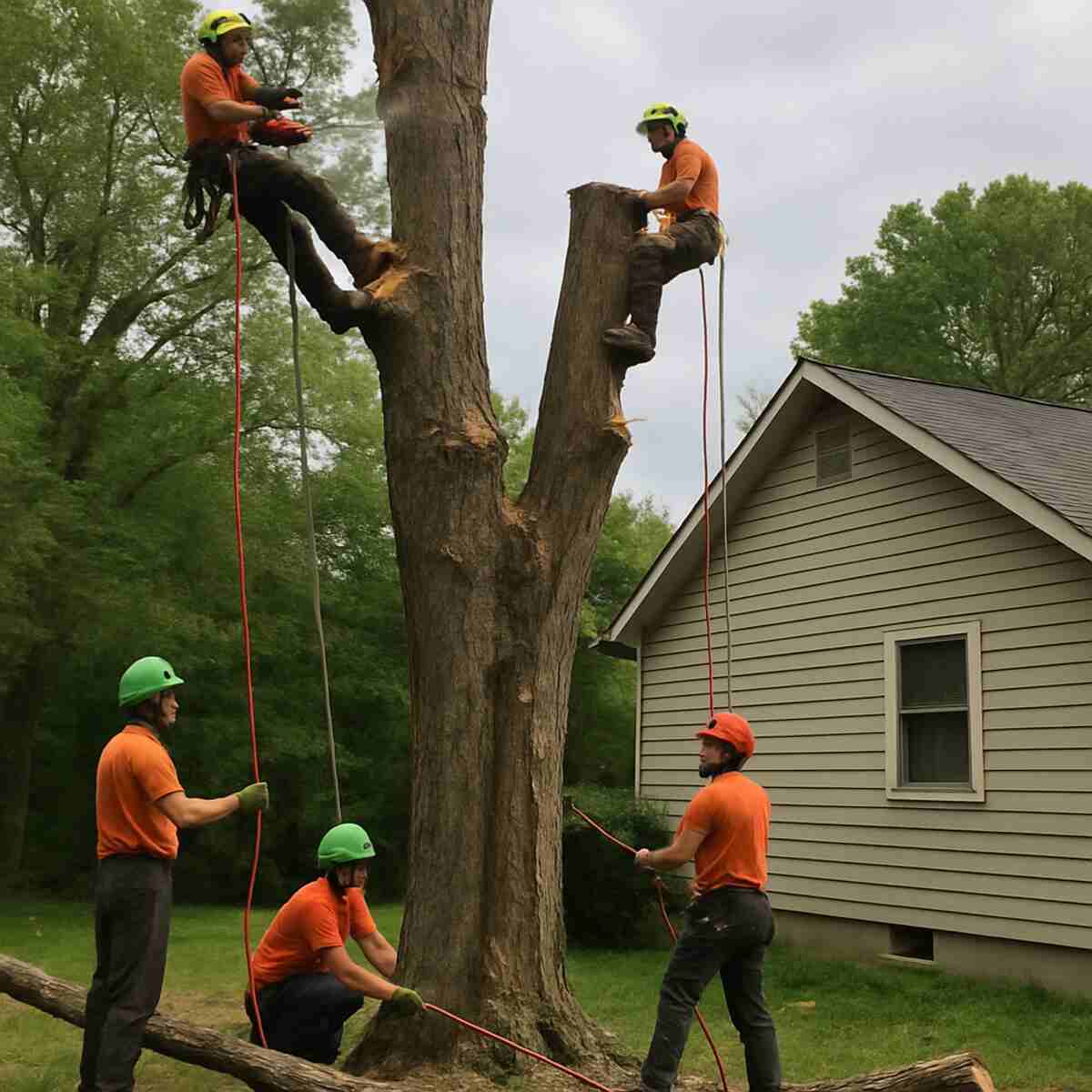
Safety equipment is just as crucial as proper technique when managing these fast-growing tropical giants. Climbing massive local species demands heavy-duty ropes, helmets, and harnesses—the exact standards utilized by premium tree trimming services and increasingly demanded by local homeowners. Unsecured amateur climbers risk catastrophic falls or dropping heavy wood onto your roof. Before hiring a fully equipped crew to safely tackle your towering canopy, you must verify local conservation laws and navigate MINAE permit requirements.
Navigating MINAE: When You Need a Permit in San Isidro de El General
Keeping your property safe means understanding Costa Rica’s strict environmental laws alongside standard maintenance. Under current MINAE regulations, the government clearly distinguishes between giving your tree a simple haircut and taking it down entirely. Routine trimming (known locally as poda) to clear branches away from your gutters or power lines generally requires no paperwork. However, complete felling (tala)—cutting a tree down to the stump—almost always triggers legal oversight.
Certain valuable woods are heavily guarded by the state, complicating legal tree removal even if they grow on your private land. If you plan to cut or heavily alter any of these commonly protected species in the Pérez Zeledón region, you must tread carefully:
- Cedro Amargo (Bitter Cedar)
- Caoba (Mahogany)
- Ron Ron
- Cristóbal
- Guanacaste (The national tree)
What happens when one of these protected giants becomes a structural hazard to your home? You cannot simply chop it down in the middle of the night. The first step for obtaining tree cutting permits in San Isidro de El General is requesting a technical evaluation from your local MINAE office. An inspector will visit your property to verify the danger—such as a dying root system or severe storm damage—and issue the official authorization required to proceed without facing massive fines.
Once your paperwork is approved, the physical challenge of dismantling a massive tropical canopy begins. Safely bringing down multi-ton branches over fragile roofs demands much more than legal permission; it requires highly specialized high-altitude equipment.
Specialized Equipment for High-Altitude Tree Maintenance
Staring up at a towering canopy swaying in the afternoon breeze makes you quickly realize a standard ladder simply won’t suffice. For tasks like routine palm tree frond cleaning or taming an overgrown mango tree, professionals rely on specialized arborist equipment to stay anchored. A safe climber requires three crucial tools: a heavy-duty harness to prevent falls, high-friction climbing ropes designed to bear their weight, and steel climbing spikes strapped to their boots to securely grip the trunk without slipping.
Instead of letting gravity dictate where a massive branch lands, experts use a technique called rigging. This involves a network of ropes and pulleys that acts like a controlled elevator for heavy wood. By lowering thousand-pound limbs slowly to the ground rather than letting them free-fall, rigging completely protects your fragile tin roofs, driveway, and garden beds during high-altitude tree maintenance.
Efficiency is the hidden financial benefit of bringing a properly outfitted crew into your yard. Because they aren’t struggling with dull machetes or unstable footing, professionals complete the job rapidly, drastically cutting down the hours spent at your home. This speed translates to lower labor costs and less disruption to your daily routine, which becomes a key factor when calculating the average price of professional pruning.
The Average Price of Professional Pruning in Pérez Zeledón
When budgeting for property maintenance, understanding the cost of professional pruning requires looking past a simple hourly rate. A reliable quote in our local market is determined by four key variables: tree height, proximity to hazards like ICE power lines or your roof, the complexity of the safety rigging required, and the specific tree species. For instance, a sprawling Guanacaste overhanging your driveway demands much more technical precision than a standalone mango tree in an open yard.
Beyond the actual climbing and cutting, debris removal is frequently the most overlooked factor in any estimate. A mature tropical canopy produces an astonishing volume of heavy wood and leafy waste, meaning haul-away fees significantly impact your final bill. If an estimate looks suspiciously cheap, verify whether the crew intends to leave a mountain of branches rotting on your lawn. Always ensure your quote explicitly includes comprehensive cleanup so you can accurately evaluate if the offer is fair.
To confidently assess your next estimate, consider these general price tiers for complete local services:
- Small tree services: Budget-friendly routine shaping for low-hanging fruit trees.
- Medium tree services: Mid-range pricing for crown thinning on shade trees approaching rooflines.
- Large tree services: Premium investment for complex rigging and towering hazard reduction.
These service tiers simplify managing your property’s greenery and help budget for specific needs, like the demanding requirements of safe palm tree maintenance.
Safe Palm Tree Maintenance: More Than Just Aesthetics
Living in San Isidro means palms are a striking feature of your property, but those massive drooping leaves demand careful attention. Effective palm maintenance starts with distinguishing a minor cosmetic flaw from a genuine structural risk. While a few yellowing lower leaves are natural, fully brown, hanging fronds are heavy dead weight. During heavy seasonal rains, these dead branches become serious falling hazards that can easily smash gutters or injure anyone walking below.
Beyond the risk of falling debris, neglecting the trunk invites unwanted wildlife right to your doorstep. Old leaf bases—commonly called “boots”—often cling to the bark, creating a damp, decaying environment perfect for nesting. Utilizing proper methods for safe palm tree frond cleaning involves carefully detaching these leftover boots. Removing this organic debris eliminates cozy hideouts for rats and scorpions, serving as the natural pest control your property needs.
To achieve a resort-style aesthetic, property owners often request “palm shaving” to slice the trunk smooth. However, local arborists know the strict line between a careful shave and a dangerous over-prune. Stripping the trunk too deeply or hacking away healthy, upward-pointing fronds causes severe shock. Damaging this protective outer tissue leaves the palm highly vulnerable to fatal rot and pest entry. Proactive property owners must learn to identify these common tree diseases early before structural failure occurs.
Identifying Common Tree Diseases in the Southern Zone
Living in our lush, humid valley means greenery grows fast, but so do fungal infections. When heavy seasonal rains arrive, constant moisture acts as an incubator for pathogens. For local property owners, identifying common tree diseases in the Southern Zone is as crucial as checking your roof for leaks before May. Waiting until a favorite shade tree drops dead branches usually means the infection is already severe.
Two frequent culprits thriving in this dampness are Pink Disease and Gummosis. Pink Disease forms a crusty, pinkish fungal web that chokes branches by destroying bark, especially on citrus or mango trees. Gummosis, conversely, looks like your tree is bleeding thick, amber sap. This isn’t normal resin; it’s a visible stress response showing the tree’s immune system is fighting an internal infection.
Threats also hide underground, like Phytophthora root rot, which decays a tree’s foundation and makes it highly vulnerable to collapsing during windstorms. To protect your Pérez Zeledón trees, watch closely for these three visual indicators:
- Unexplained gummy oozing or dark sap bleeding on the main trunk.
- Sudden top canopy dieback while lower branches temporarily stay green.
- Mushroom-like fungal growths sprouting directly from the wood or base.
Spotting these warning signs early dictates whether a plant is curable with targeted pruning or requires complete removal. If an aggressive fungus destroys the core, cutting the tree down stops spores from infecting healthy neighbors. Maintaining robust tree health prevents these contagious outbreaks, directly tying into the broader financial impact of mature trees on your real estate.
The Impact of Mature Tree Health on Your Property Value
While stopping fungal rot keeps your shade trees alive, their ongoing vitality actually acts as a major financial asset. In the growing Pérez Zeledón real estate market, mature Guanacaste or mango trees contribute directly to what experts call “arboreal equity.” This concept simply means that a healthy, structurally sound tree increases your home’s total appraisal by providing natural cooling, mature landscaping, and vital soil stabilization. Buyers pay a premium for established greenery, making the impact of tree health a critical factor for local homeowners protecting their investments.
Unlocking that financial return requires strategic maintenance, particularly when balancing curb appeal with sweeping valley vistas. Instead of destructive “topping”—which permanently disfigures the canopy—professionals use a technique called “view-window pruning.” This specialized method carefully removes specific interior branches to create clear sightlines to the Chirripó mountains while preserving the tree’s natural shape. Investing in this care yields immediate returns, as you gain breathtaking scenery without creating hazardous, rotting branch stubs that eventually deter potential property buyers.
A solid history of professional care transforms regular yard upkeep into a highly effective selling feature. Presenting buyers with maintenance records proves your landscape has been expertly managed against intense weather risks. However, even perfectly maintained arboreal equity can face unpredictable forces during our torrential October rainstorms, occasionally requiring emergency services for an unexpected midnight branch snap.
Emergency Services: Dealing with the ‘Midnight Branch Snap’
We all know the terrifying crack of a heavy branch giving way during a downpour. When severe storm damage strikes at night, your priority is simply securing your property. Before walking into the dark yard, follow this 3-step safety check for fallen branches:
- Check for wires: Never approach limbs tangled in or near ICE power lines.
- Assess resting points: Identify what is currently holding the branch up, as the entire structure may suddenly shift.
- Stay indoors: Keep your family inside and wait for daylight to safely evaluate the hazard.
Attempting to clear these massive limbs yourself with a machete often ends poorly due to hidden forces trapped inside the fallen trunk. When heavy tropical branches twist and break, they form “tension wood” on the stretched upper curve and “compression wood” on the crushed underside. Think of this dynamic like a tightly pulled rubber band; cutting into the wrong side without professional training causes the trapped energy to explosively snap back, creating a severe injury risk.
Since unpredictable weather ignores regular business hours, keeping contact information for reliable emergency fallen branch removal services is absolutely essential. Look for local San Isidro crews offering 24/7 availability and proper safety gear. Once your overhead canopy is secure and major storm threats are neutralized, your focus can safely return to ground-level landscaping, specifically maintaining the tricky privacy balance of tropical hedges.
Maintaining Tropical Hedges: The Privacy vs. Maintenance Balance
In the lush valley of Pérez Zeledón, property boundaries are rarely marked by cold metal chain-link; instead, we rely on vibrant cercas vivas, or living fences. Fast-growing species like Limonaria make excellent privacy screens, but they require a strategic trimming approach. Many homeowners mistakenly only “shear” the outer layer—giving the plant a quick buzz cut—without ever “thinning” the interior branches to let sunlight and air circulate through the dense foliage.
Relying solely on outer shearing creates a frustrating problem known as the “hollow center,” where blocked sunlight causes interior leaves to die off, leaving a fragile green shell. To correct this without harming your living fence, follow the “Rule of Thirds” for hedge reduction. By never removing more than one-third of the plant’s total volume at once, you protect the root system from sudden shock while encouraging fresh, healthy leaf growth deeper inside the structure.
Choosing exactly when to schedule these cuts is an essential step in maintaining garden hedges in tropical weather. Heavy pruning during relentless October downpours turns fresh cuts into targets for rapid fungal bloom and rot. Securing ground-level borders safely during drier windows naturally builds the confidence needed to look upward, preparing you to conduct a basic residential arboreal risk assessment on your own.
Residential Arboreal Risk Assessment: Being Your Own Scout
Looking up from those freshly trimmed garden hedges, your next priority is securing the canopy overhead. We all know the anxiety of hearing an afternoon downpour thrash a massive Guanacaste branch hovering near a tin roof. You don’t need a biology degree to protect your home; you just need to practice a 10-minute monthly tree safety audit. By utilizing simple residential arboreal risk assessment techniques, you can spot structural red flags long before the heavy May rains turn them into expensive emergencies.
Effective hazard identification relies on knowing exactly where to look. Grab your binoculars and walk your property using this 5-point ‘Hazard Inspection’ checklist:
- Look for ‘Widowmakers’: Scan the upper canopy for broken, dead branches hanging dangerously loose.
- Check the Crotch Shape: Healthy branches form a strong “U” shape at the trunk. Weak limbs form a tight “V-crotch” that splits easily in high wind.
- Spot Inclusion Bark: In tight V-crotches, old bark gets trapped between growing wood, rotting the joint from the inside out.
- Inspect the Base: Mushrooms or fungi growing near the roots often signal dangerous internal decay.
- Watch the Lean: Heaving soil opposite a newly leaning trunk means root failure is imminent.
Catching these signs early keeps your property secure during our intense tropical rainstorms. Resolving these dangerous structural flaws effectively requires hiring an arborist with deep knowledge of the Southern Zone.
Why Local Knowledge Matters: Hiring an Arborist Who Knows the Southern Zone
Spotting a dangerous tree crotch is an excellent first step, but repairing it requires understanding our unique environment. A trimming strategy from a different region won’t work in Pérez Zeledón’s distinct wind and humidity pockets. This microclimate-specific arboriculture dictates how regional pests, like the destructive palm weevil, aggressively attack freshly cut branches. When weighing the risks of hiring a local arborist vs doing it yourself, remember that improper cuts invite localized diseases that outside contractors easily overlook.
Searching for reliable tree service requires verifying true local expertise rather than just hiring anyone with a chainsaw. You can easily test their Southern Zone knowledge by asking three crucial questions during an estimate: how they sanitize tools against local fungal rot, which specific months are off-limits for heavy pruning here, and how they navigate local MINAE regulations for protected species. Since reputation matters deeply in our community, always demand local references to confirm their history of safe, legal property maintenance.
Partnering with a proven regional professional turns towering backyard hazards back into beautiful shade providers. Once you secure the right experts, protecting your property value becomes a straightforward matter of scheduling. With a trustworthy crew ready to help, you can successfully map out a year-round tree care roadmap.
Your Year-Round Tree Care Roadmap: A San Isidro Action Plan
Recognizing the vital difference between a wind-resistant, healthy tree and an overgrown liability empowers you to protect your roof, your power lines, and your view of the Chirripó mountains. Your property’s greenery is no longer a wild, unpredictable force, but a manageable asset that adds immense value to your life in the Southern Zone.
Waiting for a massive branch to fail in the middle of a torrential downpour is a costly gamble. Instead of reacting to emergencies, take full control of your landscape’s health. Crafting a personalized maintenance schedule tailored to the rapid growth rates of local mango, guanacaste, and palm species ensures your trees remain resilient and safe year-round.
Implement this seasonal maintenance schedule tailored to our local climate:
- January–March (Dry Season Pruning): Take advantage of the dry weather to thin the canopy, remove deadwood, and shape the tree without exposing fresh cuts to heavy rain.
- May (Pre-Storm Inspection): As the aguaceros begin, inspect your trees for structural weaknesses, check for root heave, and ensure branches are well clear of your roof.
- October (Emergency Readiness): During the heaviest rains, monitor soil saturation around large trees and clear away fast-growing vines that add unnecessary weight to the canopy.
As you execute this plan, keep the top three local warnings in mind to protect your investment. First, never allow a worker to “top” your tree or hack at it with a machete; this creates weak, dangerous regrowth. Second, respect the perimeter around your utilities—branches touching ICE electrical wires require specialized, immediate attention. Finally, never ignore deadwood or a leaning trunk, as our deeply saturated soils can quickly turn a minor structural flaw into a massive property disaster.
Implementing a safety-first approach to property management means knowing when to step back and call in the experts. When it comes time for elevated work or heavy branch removals, rely on a professional tree trimming service that uses proper safety gear, understands directional pruning, and respects MINAE regulations. Always prioritize the structural integrity of the tree over a quick, cheap haircut.
The next time a heavy October rain hammers your tin roof and the valley winds pick up, you will not have to cross your fingers and hope for the best. By investing in proper seasonal maintenance, you actively protect your home, preserve your arboreal equity, and honor the natural beauty of the Pérez Zeledón region.
