


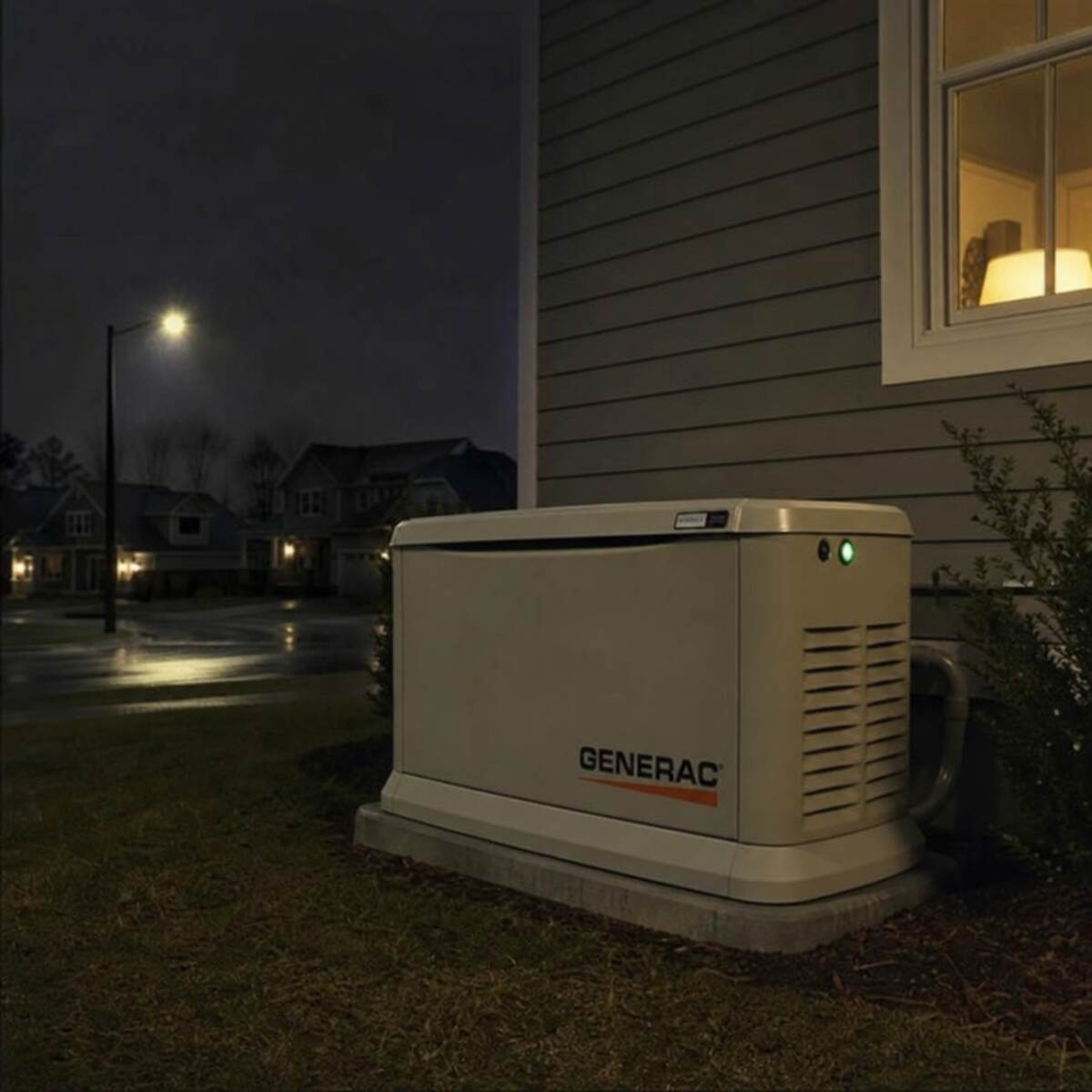
Choosing a generator is not just a shopping decision. It is a readiness decision.
When the power goes out, the right generator can keep your refrigerator cold, your lights on, your phones charged, your sump pump running, your home office connected, and your family comfortable. The wrong generator, however, can be too small, too loud, too difficult to fuel, unsafe to connect, or unreliable when you need it most. Sort out the best generator for hurricane season.
The good news: you do not need to become an electrician or engine expert to make a smart choice. You simply need to understand your power needs, your fuel options, your installation requirements, and the trade-offs between portable, inverter, and standby generators.
This guide walks you through the practical decisions that matter most so you can choose the best home emergency generator for your household, your budget, and your comfort level.
Start With the Real Question: What Do You Need to Keep Running?
The best generator is not necessarily the largest one, the most expensive one, or the one with the longest feature list. The best generator is the one that reliably powers what matters most to you.
Before comparing models, make a simple list of the things you want to use during an outage. Divide them into three categories.
Essential Loads
These are the items you truly need for safety, food preservation, communication, health, or basic comfort.
Common essential loads include:
- Refrigerator
- Freezer
- Sump pump
- Well pump
- Furnace blower
- Medical equipment
- Phone chargers
- Internet router or modem
- A few lights
- Garage door opener
- Security system
For many households, these essentials are the foundation of home power backup. If you size your generator around these items first, you can avoid overspending while still protecting your home from the biggest outage-related problems.
Comfort Loads
These are not always mandatory, but they can make a long outage much easier to handle.
Examples include:
- Television
- Microwave
- Coffee maker
- Toaster oven
- Window air conditioner
- Portable heater
- Ceiling fans
- Washing machine
- Home office equipment
Comfort loads are where generator sizing becomes more personal. One homeowner may be satisfied with lights, refrigeration, and phone charging. Another may want enough power to work remotely, cook normally, and keep multiple rooms comfortable.
Whole-Home Loads
Whole-home loads are the big-ticket electrical demands that require serious generator capacity.
These may include:
- Central air conditioning
- Electric water heater
- Electric range
- Electric dryer
- Heat pump
- Large well pump
- Multiple refrigerators or freezers
- Pool equipment
- Workshop equipment
If you want your home to function almost normally during an outage, you may need a permanently installed standby generator or a very carefully planned portable setup. This is where professional load calculations become especially important.
Understand Generator Types Before You Compare Models
Generators are not one-size-fits-all. The right choice depends on how much power you need, how often outages happen, how hands-on you want to be, and how much you are willing to invest.
Most homeowners compare three main categories: portable generators, inverter generators, and standby generators.
Portable Generators
Portable generators are movable units that typically run on gasoline, propane, diesel, or dual-fuel combinations. They are popular because they offer strong output at a relatively accessible price.
A portable generator can be a great fit if you want backup power for selected appliances and circuits rather than your entire house.
Advantages of Portable Generators
Portable generators are appealing because they are flexible. You can store one in a garage or shed, roll it out when needed, and use it for outages, job sites, camping, or remote projects.
Key benefits include:
- Lower upfront cost than standby generators
- Good power output for essentials
- No permanent installation required for basic extension-cord use
- Can be used in multiple locations
- Available in many sizes and fuel types
For many homeowners searching for the best emergency generator for home use, a portable model offers a practical balance of power and affordability.
Limitations of Portable Generators
Portable generators also require more effort during an outage. You must move the generator outdoors, start it, refuel it, run cords or connect it to a transfer switch, and monitor operation.
Potential drawbacks include:
- Manual setup during bad weather
- Fuel storage requirements
- Louder operation than many inverter models
- Limited runtime depending on tank size and load
- Safety risks if used too close to the home
- Not ideal for automatic whole-home backup
A portable generator can be a smart solution, but it is not a “set it and forget it” system.
Inverter Generators
Inverter generators are a more refined type of portable generator. They use engine-driven alternators and electronic circuitry to produce cleaner, more stable power. They are often quieter and more fuel-efficient than conventional portable generators.
Inverter models are especially popular for electronics, small homes, RVs, camping, and homeowners who want a quieter backup power option.
Advantages of Inverter Generators
Inverter generators shine when you need clean power and lower noise.
Common benefits include:
- Quieter operation
- Better fuel efficiency at lower loads
- Cleaner power for sensitive electronics
- Lighter and more compact options available
- Some models can be connected in parallel for more output
If your backup plan focuses on a refrigerator, lights, internet equipment, laptops, phones, and a few smaller appliances, an inverter generator may be a strong choice.
Limitations of Inverter Generators
The main limitation is output. Many inverter generators are designed for moderate loads, not full-home backup. Larger inverter generators exist, but they usually cost more than conventional portable generators with similar wattage.
Potential drawbacks include:
- Higher cost per watt
- Smaller fuel tanks on compact models
- Limited ability to power large appliances
- Not always ideal for central air conditioning or heavy startup loads
An inverter generator is often a premium portable option, not always the highest-power option.
Standby Generators
Standby generators are permanently installed outside the home. They are connected to your electrical system through a transfer switch and typically run on natural gas or propane. When the power goes out, many standby systems can turn on automatically.
This is the most convenient form of home power backup.
Advantages of Standby Generators
Standby generators are built for homeowners who want reliability, automation, and minimal disruption.
Key benefits include:
- Automatic startup during an outage
- Permanent connection to selected circuits or the whole home
- No need to move equipment outdoors during a storm
- No extension cords throughout the house
- Often powered by natural gas or large propane tanks
- Can support larger loads depending on system size
For households with frequent outages, medical needs, remote work requirements, or strong comfort expectations, a standby generator can be the most complete solution.
Limitations of Standby Generators
The main trade-off is cost. Standby generators require professional installation, electrical work, fuel connections, permits in many areas, and periodic maintenance.
Potential drawbacks include:
- Higher upfront investment
- Requires permanent outdoor space
- Professional installation needed
- Ongoing maintenance requirements
- Less portable or flexible than other options
A standby system may be the best home emergency generator for households that want automatic, whole-home or near-whole-home backup, but it is more of a home infrastructure investment than a simple appliance purchase.
Match the Generator to Your Outage Reality
Not every household needs the same level of backup power. Think about the outages you are actually preparing for.
Short, Occasional Outages
If your power usually returns within a few hours, your generator needs may be modest. You may only need to keep food cold, phones charged, and a few lights running.
A smaller portable or inverter generator may be enough.
Good priorities for short outages include:
- Refrigerator or freezer support
- Phone charging
- Internet access
- Basic lighting
- Occasional microwave or coffee maker use
Longer Storm-Related Outages
If storms, high winds, hurricanes, ice, or wildfire-related shutoffs can leave you without power for a day or more, you may want a more robust setup.
In this situation, think about:
- Fuel availability
- Runtime
- Heating or cooling needs
- Well pump or sump pump needs
- Ability to safely connect to home circuits
- Noise limits during extended use
A mid-size portable generator with a transfer switch or a standby generator may be more appropriate.
Frequent or High-Stakes Outages
If outages are frequent, long, or especially disruptive, convenience matters. The more often you use backup power, the more valuable an automatic system becomes.
A standby generator may make sense if:
- Someone in the home depends on powered medical equipment
- You work from home and cannot afford downtime
- You have a basement that depends on a sump pump
- You live in an area with frequent severe weather
- You want heating, cooling, refrigeration, and security systems to continue automatically
When the cost of losing power is high, the value of reliable backup power increases.
Calculate How Much Power You Need
Generator sizing is where many homeowners make mistakes. Too small, and the generator may overload or fail to start key appliances. Too large, and you may spend more than necessary, burn more fuel, and create more noise.
Generator capacity is usually measured in watts. You will commonly see two wattage numbers:
- Running watts: The power needed to keep something operating.
- Starting watts: The extra surge power needed to start motors, compressors, pumps, and some appliances.
Starting watts matter because appliances like refrigerators, air conditioners, sump pumps, and well pumps can require significantly more power for a few seconds when they start.
A Simple Sizing Process
Use this step-by-step approach to estimate your needs.
- List every item you want to power.
- Write down the running watts for each item.
- Identify which items have startup surges.
- Add the running watts for the items likely to run at the same time.
- Add the largest starting surge on top of that number.
- Choose a generator with a comfortable margin above your estimate.
Do not assume you will run every appliance at once. A good backup plan often involves load management. For example, you might run the refrigerator continuously, use the microwave briefly, then turn it off before running a coffee maker.
Common Household Load Examples
Wattage varies by appliance, age, efficiency, and startup requirements, so always check your specific equipment. Still, it helps to understand general categories.
Lower-power items may include:
- LED lights
- Phone chargers
- Laptop chargers
- Wi-Fi routers
- Small fans
Moderate-power items may include:
- Refrigerator
- Freezer
- Television
- Microwave
- Coffee maker
- Furnace blower
- Sump pump
High-power items may include:
- Central air conditioner
- Electric range
- Electric water heater
- Electric dryer
- Large well pump
- Heat pump
The more high-power items you want to run, the more important proper sizing becomes.
Choose Between Essentials-Only and Whole-Home Backup
One of the biggest decisions is whether you want to power only essential circuits or most of your home.
Essentials-Only Backup
Essentials-only backup focuses on the circuits that matter most during an outage. This is usually the most cost-effective approach.
An essentials-only system may power:
- Refrigerator
- Freezer
- Furnace blower
- Sump pump
- A few lights
- Wi-Fi equipment
- Selected outlets
- Medical devices
This approach is ideal if you want practical protection without trying to recreate normal grid power.
Managed Whole-Home Backup
Managed whole-home backup uses a larger generator and smart load planning. Some systems can prioritize certain circuits and temporarily shed large loads when needed.
This can allow you to power much of the home without sizing the generator for every possible appliance at the same time.
Managed backup is useful when you want:
- Heating or cooling support
- Kitchen functionality
- Multiple rooms powered
- Reduced manual decision-making
- Better comfort during long outages
True Whole-Home Backup
True whole-home backup means the generator is sized to handle nearly everything you expect to use. This often requires a large standby generator, professional design, and careful attention to fuel supply.
This may be right for large homes, rural properties, households with special needs, or homeowners who want minimal lifestyle disruption during outages.
Understand Fuel Options
Fuel choice affects convenience, runtime, storage, cost, maintenance, and availability during emergencies. The best generator for your home is partly the generator you can actually fuel when the power is out.
Gasoline Generators
Gasoline is common for portable generators. It is easy to find in normal conditions and delivers strong power output.
Gasoline Pros
- Widely available
- Familiar and easy to use
- Good output for portable generators
- Many generator models available
Gasoline Cons
- Limited storage life without treatment
- Requires safe storage in approved containers
- Can be difficult to obtain during regional outages
- Refueling can be inconvenient during long events
- More maintenance concerns if fuel sits too long
Gasoline can work well for occasional outages, but you need a fuel rotation plan. Stale fuel is one of the most common reasons small engines fail when they are needed most.
Propane Generators
Propane is popular for both portable and standby generators. It stores well and can be kept in cylinders or larger tanks.
Propane Pros
- Long storage life
- Cleaner storage than gasoline
- Available for dual-fuel generators
- Good option for homes without natural gas
- Larger tanks can support longer runtime
Propane Cons
- Output may be slightly lower than gasoline on some models
- Cylinder runtime can be limited
- Large tanks require planning and space
- Delivery may be affected during severe regional disruptions
Propane is often a strong choice for homeowners who want emergency fuel stored ahead of time.
Natural Gas Generators
Natural gas is most common with standby generators. It is convenient because the generator connects to a utility gas line where available.
Natural Gas Pros
- No gasoline storage
- No manual refueling in many installations
- Excellent convenience for standby systems
- Good for automatic home power backup
Natural Gas Cons
- Not available everywhere
- Requires professional connection
- Output may vary by generator and fuel type
- Utility disruptions, while less common than electric outages, are still possible
Natural gas is one of the most convenient fuel choices for standby backup, especially in areas with reliable gas service.
Diesel Generators
Diesel generators are known for durability and efficiency under heavier loads. They are common in commercial and industrial settings, though some homeowners use them for larger backup needs.
Diesel Pros
- Durable engines
- Efficient under load
- Strong performance for larger power needs
- Fuel is generally less volatile than gasoline
Diesel Cons
- Fewer residential options
- Higher noise and emissions concerns depending on model
- Fuel storage still requires care
- Cold-weather performance may require attention
Diesel may be suitable for rural properties, farms, workshops, or heavy-duty backup needs, but it is not always the simplest residential choice.
Dual-Fuel and Tri-Fuel Generators
Dual-fuel generators typically run on gasoline or propane. Tri-fuel models may add natural gas capability.
These models are popular because they provide flexibility during emergencies.
Why Fuel Flexibility Matters
During a widespread outage, one fuel may be easier to access than another. Gas stations may have lines. Propane exchange cages may be empty. Natural gas may be convenient if your home has the connection.
A dual-fuel or tri-fuel generator gives you options.
This can be especially helpful if you want a portable generator that can run on stored propane for emergency readiness but still use gasoline when needed for maximum output.
Decide How You Will Connect the Generator
How you connect your generator is just as important as the generator itself. A powerful generator connected incorrectly can be dangerous.
There are three common approaches.
Extension Cords
The simplest method is to run heavy-duty outdoor-rated extension cords directly from the generator to individual appliances.
This can work for basic portable backup.
Best uses include:
- Refrigerator
- Freezer
- Phone chargers
- Lamps
- Small electronics
- Select plug-in appliances
However, extension cords are not ideal for hardwired systems such as a furnace blower, well pump, central air conditioning, or built-in lighting circuits.
If you use extension cords, choose cords rated for the load, outdoor conditions, and generator output. Avoid overloading cords, running them through wet areas, or creating trip hazards.
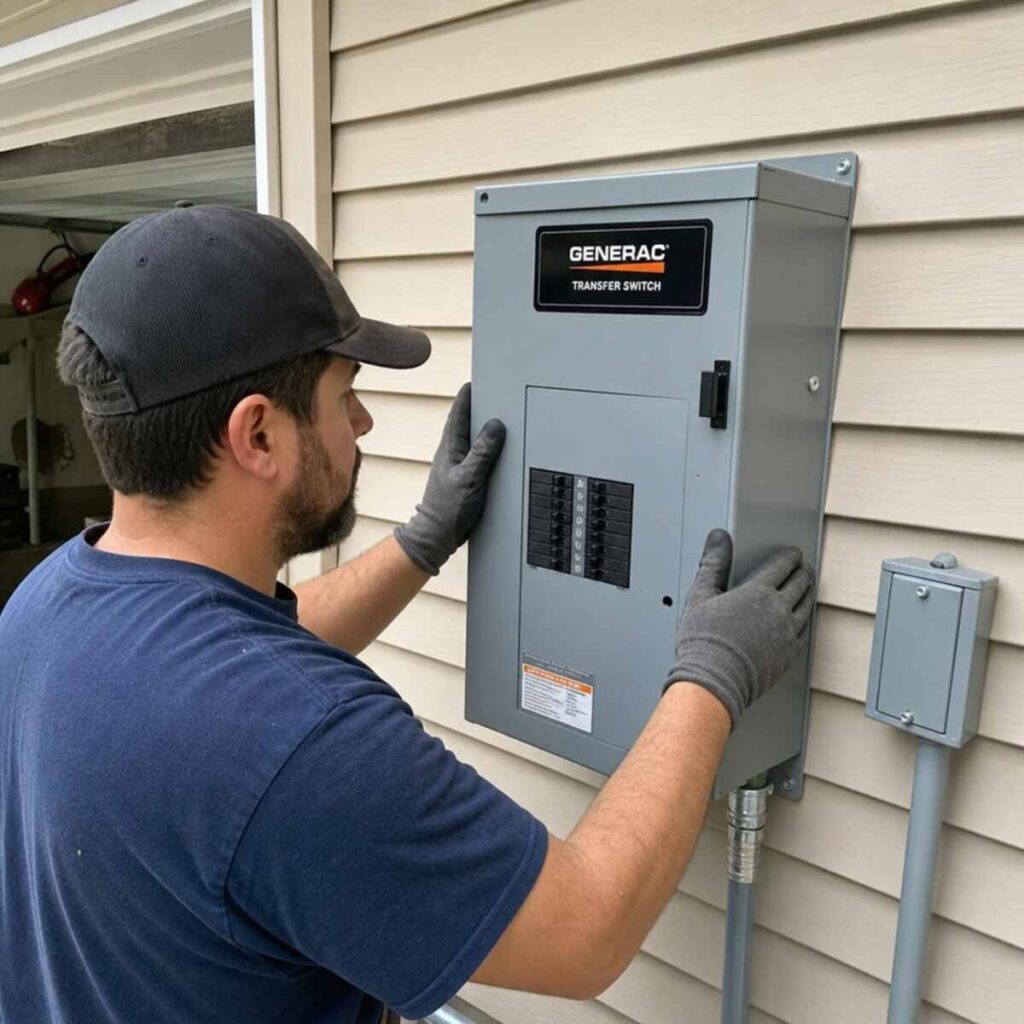
Manual Transfer Switch
A manual transfer switch allows a portable generator to power selected home circuits safely. It prevents the generator from backfeeding utility lines, which can endanger utility workers and damage equipment.
With a manual transfer switch, you choose which circuits are backed up. During an outage, you start the generator, connect it to the inlet, and switch selected circuits over to generator power.
This is a strong option for homeowners who want portable-generator affordability with a cleaner, safer home connection.
A manual transfer setup may support:
- Refrigerator circuit
- Furnace circuit
- Sump pump circuit
- Lighting circuits
- Internet equipment
- Select outlets
Automatic Transfer Switch
An automatic transfer switch is typically used with standby generators. When utility power fails, the switch detects the outage, starts the generator, and transfers power automatically.
When utility power returns, the system transfers back and shuts the generator down.
This is the most convenient setup and a major reason homeowners choose standby generators.
Never Backfeed a Home Through a Dryer Outlet
Backfeeding means using a generator to send power into the home through an outlet, often with an unsafe cord. This is extremely dangerous. It can energize utility lines, injure workers, cause fires, damage appliances, and create shock hazards.
If you want to connect a generator to your home’s electrical system, use a properly installed transfer switch or approved interlock system installed according to local requirements.
This is one area where shortcuts are not worth it.
Think About Safety Before Features
Generators are powerful machines. They produce electricity, heat, noise, and exhaust. Safety needs to shape your buying decision and your operating plan.
Carbon Monoxide Safety
Generator exhaust contains carbon monoxide, an invisible and odorless gas that can be deadly. Generators must be operated outdoors and away from windows, doors, vents, crawl spaces, garages, and enclosed areas.
Do not run a generator in:
- A garage
- A basement
- A shed
- A porch
- A carport
- An enclosed patio
- Near open windows or vents
Even if a door is open, an enclosed or semi-enclosed space can allow carbon monoxide to build up.
Look for generators with carbon monoxide detection and automatic shutoff features. These features are valuable, but they do not replace proper placement.
Electrical Safety
Water and electricity do not mix. Since generators are often used during storms, plan ahead for dry, stable operation.
Helpful practices include:
- Place the generator on a firm, dry surface
- Use outdoor-rated cords
- Keep connections off wet ground
- Do not touch electrical connections with wet hands
- Use covers designed for generator operation if protection from rain is needed
- Follow the manufacturer’s instructions
Never improvise electrical connections.
Fuel Safety
Fuel should be stored and handled carefully.
Basic fuel safety includes:
- Store fuel in approved containers
- Keep fuel away from living areas and ignition sources
- Let the generator cool before refueling
- Do not overfill the tank
- Clean up spills immediately
- Rotate gasoline according to your storage plan
A good fuel plan is part of a good generator plan.
Noise Safety and Neighbor Awareness
Generators can be loud, especially conventional portable models. Long outages can make generator noise a neighborhood issue.
Before buying, consider:
- Decibel ratings
- Distance from property lines
- Local noise rules
- Nighttime use expectations
- Placement away from bedrooms
- Whether an inverter model would be quieter
A quieter generator can make a major difference during multi-day outages.
Evaluate Runtime and Fuel Consumption
Runtime tells you how long a generator can operate on a given amount of fuel at a specific load. Do not compare runtime numbers without checking the load percentage.
A generator may run much longer at quarter load than at full load. If your backup plan runs the generator near maximum capacity all day, expect fuel consumption to rise and runtime to fall.
Why Runtime Matters
Runtime affects:
- How often you refuel
- How much fuel you need to store
- Overnight convenience
- Long-outage planning
- Operating cost
For portable generators, longer runtime can reduce the need to refuel in poor weather or darkness. For standby generators, runtime depends heavily on fuel supply, especially if using propane.
Load Management Extends Runtime
You can often extend runtime by managing what runs at the same time.
For example:
- Keep the refrigerator and freezer closed as much as possible
- Turn off lights in unused rooms
- Use LED bulbs
- Run high-demand appliances only when needed
- Avoid running microwave, coffee maker, toaster, and pump loads simultaneously
- Use fans strategically instead of heavy cooling loads when possible
The less load you place on the generator, the longer your fuel may last.
Consider Starting Method and Ease of Use
A generator that is hard to start or confusing to operate may not serve you well in a real outage. Ease of use matters, especially when the lights are out, the weather is bad, and stress is high.
Common starting methods include:
- Recoil pull start
- Electric start
- Remote start
- Automatic start on standby systems
Recoil Start
Recoil start is simple and reliable, but it requires physical effort. This may be fine for smaller generators, but it can be challenging on larger units or for some users.
Electric Start
Electric start uses a battery and push-button or key ignition. It is easier than pull-starting, especially on larger generators.
If you choose electric start, remember that the battery must be maintained.
Remote Start
Some portable generators offer remote start. This can be convenient, but you still need to ensure the generator is safely positioned outdoors before operation.
Automatic Start
Standby generators are the easiest during an outage because they can start automatically. This is especially valuable if you are away from home when the outage begins.
Automatic operation can help protect refrigerators, freezers, sump pumps, and security systems even when no one is home to start a portable generator.
Compare Noise Levels Carefully
Noise is one of the most underestimated generator factors. A generator that looks perfect on paper may be frustrating if it is too loud for your home, neighbors, or local rules.
Noise is usually listed in decibels, but decibel comparisons can be tricky because distance and load affect real-world sound.
What Makes a Generator Quieter?
Several factors influence noise:
- Inverter technology
- Engine size
- Enclosed design
- Muffler quality
- Load level
- Placement
- Surface beneath the generator
Inverter generators are often quieter because they can adjust engine speed to match demand rather than running at a constant high speed.
When Noise Matters Most
Noise becomes especially important if:
- You live in a dense neighborhood
- You need overnight operation
- Your generator will be near bedrooms
- You expect long outages
- You have local noise limits
- You want backup power without constant engine sound
A quieter generator may cost more, but the comfort benefit can be substantial.
Look at Power Quality for Electronics
Many modern homes include sensitive electronics: laptops, routers, smart TVs, medical devices, charging stations, security systems, and smart home equipment.
Power quality matters when you plan to run these items.
Inverter generators are often chosen because they provide cleaner power with lower distortion. This can be reassuring if your backup plan includes electronics and connected devices.
That does not mean every home needs an inverter generator. Many conventional generators can handle common appliances well. But if electronics are a priority, power quality should be part of your decision.
Check Outlets, Voltage, and Compatibility
Do not buy a generator based on wattage alone. Make sure it has the outlets and voltage your setup requires.
Common outlet considerations include:
- Standard household outlets
- RV-style outlets
- Twist-lock outlets
- 120-volt output
- 240-volt output
- Transfer switch compatibility
- GFCI protection
If you need to power a well pump, certain transfer switch setups, or larger household circuits, you may need 240-volt capability. Smaller inverter generators may only provide 120 volts.
This is one of the most common mismatches homeowners discover too late.
Before buying, confirm:
- What your appliances require
- What your transfer switch or inlet requires
- Whether the generator supports 120 volts only or both 120 and 240 volts
- Whether the outlet type matches your intended connection
When in doubt, ask a qualified electrician before purchasing.
Decide Whether Portability Actually Matters
A generator may be called portable, but that does not mean it is easy for everyone to move. Larger portable generators can be heavy.
Consider practical details such as:
- Weight
- Wheel size
- Handle design
- Storage location
- Path from storage to operating location
- Whether one person can move it safely
- Whether snow, mud, gravel, or steps will be involved
If the generator lives in the garage but must be rolled across uneven ground during a storm, portability matters a lot.
A smaller inverter generator may be easier to move, but it may not power as much. A larger wheeled generator may offer more output, but it may require more strength and space.
Plan the Generator Location Before You Buy
Safe generator placement is not something to figure out during an outage. Decide in advance where the generator will run.
A good location should be:
- Outdoors
- Away from windows, doors, vents, and openings
- Protected from standing water
- Stable and level
- Accessible for refueling and maintenance
- Far enough from neighbors when possible
- Close enough for safe cord or inlet connection
Standby generators also need permanent placement that meets clearance requirements, fuel connection needs, service access, and local rules. This is part of why professional installation is important.
Maintenance: The Hidden Difference Between Ready and Useless
A generator that sits unused for years without maintenance may fail when the outage finally happens. Maintenance is not optional if you want dependable backup power.
Portable Generator Maintenance
Portable generators commonly need:
- Oil checks and oil changes
- Air filter inspection
- Spark plug inspection
- Fuel system care
- Battery charging for electric-start models
- Periodic test runs
- Cleaning and dry storage
Gasoline models need extra attention because old fuel can cause starting problems. If you store gasoline, use an appropriate stabilizer when needed and rotate fuel according to your plan.
Standby Generator Maintenance
Standby generators also need routine care. Many automatically exercise themselves on a schedule, but exercise cycles do not replace maintenance.
Standby maintenance may include:
- Oil and filter changes
- Battery checks
- Air filter replacement
- Spark plug service
- Coolant checks on liquid-cooled models
- Inspection of wiring and connections
- Professional service intervals
If you choose a standby generator, consider whether you will handle basic maintenance yourself or use a service plan.
Create a Simple Readiness Routine
A practical readiness routine might include:
- Test the generator periodically
- Keep oil and basic supplies on hand
- Inspect cords and connections
- Check fuel levels
- Confirm carbon monoxide detectors are working
- Review startup steps with household members
- Keep the manual accessible
Preparedness is not just ownership. It is the habit of keeping equipment ready.
Budget Beyond the Sticker Price
Generator cost includes more than the machine.
When comparing options, account for the total setup.
Possible costs include:
- Generator purchase
- Transfer switch or interlock installation
- Power inlet box
- Heavy-duty cords
- Fuel containers or propane tanks
- Concrete pad or mounting base
- Electrical permits
- Fuel line work
- Maintenance supplies
- Professional installation
- Delivery
- Warranty or service plans
A portable generator may have a lower purchase price, but once you add safe connection equipment, cords, and fuel storage, the real budget increases. A standby generator has a higher upfront cost, but it includes convenience and automatic operation that portable units cannot match.
The smartest choice is not always the cheapest generator. It is the system that meets your needs safely and reliably at a cost you can justify.
Think About Warranty, Service, and Parts
Generators are mechanical systems. Eventually, they need service. Before buying, consider how easy it will be to get support.
Look for:
- Clear warranty coverage
- Local service availability
- Replacement parts access
- Strong dealer or manufacturer support
- Good documentation
- Reasonable maintenance requirements
A bargain generator is less attractive if parts are hard to find or service is unavailable in your area.
This is especially important for standby generators because installation and long-term support are part of the value.
Features Worth Considering
Features should support your actual use case. Do not pay extra for features that do not matter, but do not overlook features that improve safety and usability.
Helpful features may include:
- Carbon monoxide shutoff
- Low-oil shutdown
- Electric start
- Fuel gauge
- Hour meter
- Automatic voltage regulation
- Inverter power
- Parallel capability
- Multiple fuel options
- Covered outlets
- GFCI protection
- 120/240-volt capability
- Remote monitoring on standby systems
The right features depend on your situation. For example, a homeowner using extension cords for a refrigerator and lights may value quiet operation and fuel efficiency. A homeowner connecting to a transfer switch may care more about 240-volt output and a proper locking outlet.
Common Generator Buying Mistakes
A good generator decision is often about avoiding the big mistakes.
Mistake 1: Buying Based on Peak Watts Alone
Peak or starting watts can look impressive, but running watts tell you what the generator can sustain. Always compare both numbers.
Mistake 2: Ignoring Startup Loads
Motors and compressors need extra power to start. If you ignore surge requirements, the generator may struggle or trip when key appliances cycle on.
Mistake 3: Forgetting About Fuel
A generator without fuel is just heavy equipment. Plan how much fuel you need, how you will store it, and how you will replenish it during longer outages.
Mistake 4: Choosing Too Much Generator
Oversizing can mean higher cost, more noise, and greater fuel use. Bigger is not automatically better.
Mistake 5: Choosing Too Little Generator
Undersizing can lead to overloads, frustration, and unsafe workarounds. Give yourself a reasonable margin.
Mistake 6: Skipping the Transfer Switch
If you want to power household circuits, a proper transfer switch or approved interlock setup is essential. Extension cords may be fine for plug-in appliances, but they are not a whole-home connection strategy.
Mistake 7: Waiting Until a Storm Is Coming
Generator shopping under pressure leads to compromises. The best time to choose a generator is before everyone else needs one.
Mistake 8: Not Practicing Setup
Do not let the first real outage be your first test. Practice safely setting up, starting, loading, and shutting down the generator in calm conditions.
How to Choose the Best Generator for Different Home Situations
Every home has a different backup power profile. Use the scenarios below to narrow your thinking.
For an Apartment or Small Home
If you live in an apartment, condo, or small home, generator options may be limited by outdoor space, rules, and safe placement requirements. Many apartments do not have a safe or permitted location for a fuel-powered generator.
If a generator is allowed and safe placement is available, a small inverter generator may be enough for basic charging and a few appliances. However, many renters are better served by battery power stations for indoor-friendly backup of phones, laptops, routers, and small devices.
For small detached homes, an inverter generator or compact portable generator can often cover essentials.
Priorities include:
- Quiet operation
- Safe outdoor placement
- Low fuel storage burden
- Basic refrigeration and charging
- Simple setup
For a Family Home With Basic Backup Needs
A typical family home may need refrigeration, lighting, internet, furnace blower, sump pump, and occasional appliance use.
A mid-size portable generator connected through a manual transfer switch can be a strong fit. This setup can provide meaningful home power backup without the cost of a full standby system.
Priorities include:
- Enough running watts for core circuits
- Surge capacity for pumps and refrigerator
- 120/240-volt capability if needed
- Safe transfer switch connection
- Manageable fuel consumption
- Easy starting
For a Rural Home With a Well Pump
Rural homes often have different backup priorities. If you depend on a well pump, losing power may also mean losing running water.
Well pumps can have significant startup requirements and may require 240 volts. Do not guess. Check the pump specifications and consult an electrician if needed.
Priorities include:
- Adequate surge capacity
- 240-volt output if required
- Transfer switch compatibility
- Fuel storage for longer outages
- Ability to support heating systems
- Reliable cold-weather starting
For some rural properties, a larger portable generator or standby system may be justified.
For a Home With a Sump Pump
If your basement depends on a sump pump, backup power can prevent expensive water damage. In this case, the generator does not just provide comfort; it helps protect the structure.
Priorities include:
- Sump pump startup capacity
- Automatic operation if flooding risk is high
- Battery backup as an additional layer
- Safe connection to the pump circuit
- Fuel readiness during storms
If outages often coincide with heavy rain, a standby generator or a well-planned portable setup can offer peace of mind.
For Remote Workers
If you work from home, your priorities may include internet, computers, lighting, heating or cooling, and enough power for a functional workspace.
A quiet inverter generator may be attractive if your loads are moderate. A standby system may be better if downtime has financial consequences.
Priorities include:
- Clean power for electronics
- Router and modem backup
- Low noise
- Extended runtime
- Ability to power heating or cooling
- Automatic backup if outages happen while you are in meetings or away
In this scenario, pairing a generator with a battery backup for computers and networking equipment can provide smoother transitions.
For Medical or Accessibility Needs
If someone in the household relies on powered medical equipment, generator planning becomes more serious. You may need redundancy, automatic operation, and professional guidance.
Priorities include:
- Reliable power for required equipment
- Automatic transfer if needed
- Fuel supply planning
- Maintenance discipline
- Battery backup for transition time
- Clear emergency procedures
In this case, the best emergency generator for home use is the one that supports the specific equipment safely and consistently. Consult equipment providers, electricians, and relevant professionals before finalizing your setup.
For Whole-Home Comfort
If you want central air conditioning, heating, cooking, refrigeration, electronics, and normal household routines, you are likely looking at a standby generator or a large, professionally connected portable system.
Priorities include:
- Professional load calculation
- Automatic transfer switch
- Fuel supply capacity
- Load management
- Maintenance plan
- Local code compliance
Whole-home comfort is achievable, but it requires planning. This is not the place for guesswork.
Portable Generator vs. Standby Generator: Which Is Better?
The answer depends on what “better” means for you.
A portable generator is often better if you want:
- Lower upfront cost
- Flexibility
- Backup for selected essentials
- Seasonal or occasional use
- The ability to move the generator
- A less permanent setup
A standby generator is often better if you want:
- Automatic operation
- Whole-home or near-whole-home backup
- No manual setup during storms
- No gasoline storage
- Strong convenience
- Protection when you are away from home
If outages are rare and short, a portable generator may be enough. If outages are frequent, long, or high-risk, a standby generator may be worth the investment.
Should You Consider a Battery Backup Instead?
Battery power stations and home battery systems are increasingly common alternatives or complements to generators. They store electricity rather than producing it from fuel.
Battery systems can be useful because they are quiet, emission-free at the point of use, and often easier to operate. Smaller power stations can support phones, laptops, routers, lights, and some small appliances. Larger home battery systems can support selected circuits or integrate with solar systems.
However, batteries have limits. Once depleted, they must be recharged from the grid, solar panels, a vehicle, or another power source. For long outages with heavy loads, a fuel-powered generator may provide longer practical runtime.
A smart backup strategy may combine both:
- Battery backup for instant, quiet power
- Generator backup for longer outages
- Solar charging where practical
- UPS units for sensitive electronics
This hybrid approach can reduce generator runtime while still providing resilience.
Create a Practical Buying Checklist
Before you choose a generator, work through this checklist.
Your Power Needs
Ask yourself:
- What must stay on during an outage?
- What would be nice to have?
- Do I need heating, cooling, or both?
- Do I have a sump pump or well pump?
- Do I need to power medical equipment?
- Do I need 240 volts?
- Am I comfortable managing loads manually?
Your Outage Pattern
Consider:
- How often outages happen
- How long they usually last
- Whether outages happen during storms
- Whether fuel becomes hard to find
- Whether you are often away from home
- Whether freezing temperatures or extreme heat are concerns
Your Fuel Plan
Decide:
- Which fuel is easiest to store or access?
- How much fuel will you keep on hand?
- How will you rotate fuel?
- Is natural gas available?
- Is propane storage practical?
- Can you safely refuel during extended outages?
Your Connection Plan
Confirm:
- Will you use extension cords only?
- Do you need a manual transfer switch?
- Do you want automatic transfer?
- Which circuits should be backed up?
- Does the generator have the right outlets?
- Do you need an electrician?
Your Safety Plan
Prepare:
- A safe outdoor operating location
- Carbon monoxide detectors
- Outdoor-rated cords
- Dry storage
- Fuel storage
- Written startup and shutdown steps
- Household training
Your Maintenance Plan
Decide:
- Who will maintain the generator?
- How often will you test it?
- Where will you store the manual?
- What oil, filters, plugs, or supplies should be available?
- Will you use a professional service plan?
Questions to Ask Before You Buy
Use these questions to make your final comparison clearer.
- What is the generator’s running watt capacity?
- What is its starting watt capacity?
- What fuel does it use?
- How long does it run at typical load?
- Does it support 120 volts, 240 volts, or both?
- What outlet types are included?
- Is it transfer-switch ready?
- Does it have carbon monoxide shutoff?
- How loud is it at a stated distance and load?
- How heavy is it, and can I move it safely?
- How easy is it to start?
- What maintenance does it require?
- Is service available locally?
- What warranty is included?
- What additional accessories or installation work will I need?
A generator that answers these questions well is more likely to serve you well when conditions are not ideal.
Best Practices for Using a Generator During an Outage
Buying the generator is only half the job. Using it correctly matters just as much.
Before the Outage
Prepare by doing the following:
- Read the owner’s manual
- Test-start the generator
- Label cords and connections
- Install a transfer switch if needed
- Store fuel safely
- Keep maintenance supplies ready
- Charge electric-start batteries
- Test carbon monoxide detectors
- Practice the setup process
During the Outage
Operate carefully:
- Place the generator outdoors in the planned location
- Keep exhaust away from openings
- Start the generator before adding loads
- Add appliances or circuits gradually
- Monitor fuel level
- Avoid overloads
- Keep the generator dry
- Let the engine cool before refueling
After the Outage
Once utility power returns:
- Disconnect loads properly
- Let the generator cool
- Inspect cords and equipment
- Refill or stabilize fuel as needed
- Check oil level
- Note runtime hours
- Schedule maintenance if due
- Store the generator clean and dry
A few minutes of post-outage care can make the next outage much easier.
How Much Generator Capacity Is Enough?
There is no universal wattage that fits every home. The right capacity depends on your essential loads, appliance startup requirements, and comfort expectations.
As a general way to think about it:
- Small backup setups may cover lights, charging, and a refrigerator.
- Mid-size setups may support several essential circuits, a furnace blower, a sump pump, and selected outlets.
- Larger setups may support well pumps, more appliances, and greater comfort.
- Standby systems can be sized for selected circuits, managed whole-home backup, or extensive whole-home coverage.
The mistake is starting with a random wattage. Start with your loads instead. Let your home tell you what size generator you need.
What Makes the Best Home Emergency Generator?
The best home emergency generator is not defined by one feature. It is the result of fit.
A strong choice should be:
- Properly sized for your essential loads
- Compatible with your connection plan
- Practical to fuel during an outage
- Safe to operate at your property
- Reasonable to maintain
- Supported by service and parts
- Quiet enough for your setting
- Easy enough for your household to use
- Within your realistic budget
If a generator fails on any of these points, it may not be the right choice no matter how good the specifications look.
A Simple Decision Framework
If you are still unsure, use this simple framework.
Choose a Small Inverter Generator If…
- You only need basic electronics, lights, and small appliances
- Quiet operation matters
- You want easy portability
- You do not need 240-volt output
- You are comfortable using extension cords safely
Choose a Mid-Size Portable Generator If…
- You want to power several essential circuits
- You need more output than a small inverter can provide
- You are willing to set it up manually
- You can store fuel safely
- You plan to use a manual transfer switch
Choose a Large Portable Generator If…
- You have higher startup loads
- You need 240-volt capability
- You want more appliance flexibility
- You are comfortable with more noise and fuel use
- You have a safe storage and operating plan
Choose a Standby Generator If…
- You want automatic backup power
- You need protection when away from home
- You have frequent or long outages
- You want to power many circuits or most of the home
- You prefer professional installation and service
- You want the most convenient home power backup solution
Final Thoughts: Buy the System, Not Just the Generator
A generator is only one part of a complete backup power plan. The full system includes sizing, fuel, connection, safety, maintenance, and the people who will operate it.
If you want the best emergency generator for home use, start with your real needs. Decide what must stay powered. Understand your fuel options. Choose a safe connection method. Build in enough capacity for startup loads. Then select a generator that fits your home rather than forcing your home to fit the generator.
The goal is not to buy the biggest machine on the shelf. The goal is to create confidence.
When the power goes out, you want a system that is ready, safe, and simple enough to use under pressure. That is what separates a generator you own from a generator you can count on.
